


Why Your Website Isn’t Converting: 5 Ways to Fix Your Website Conversion Rate

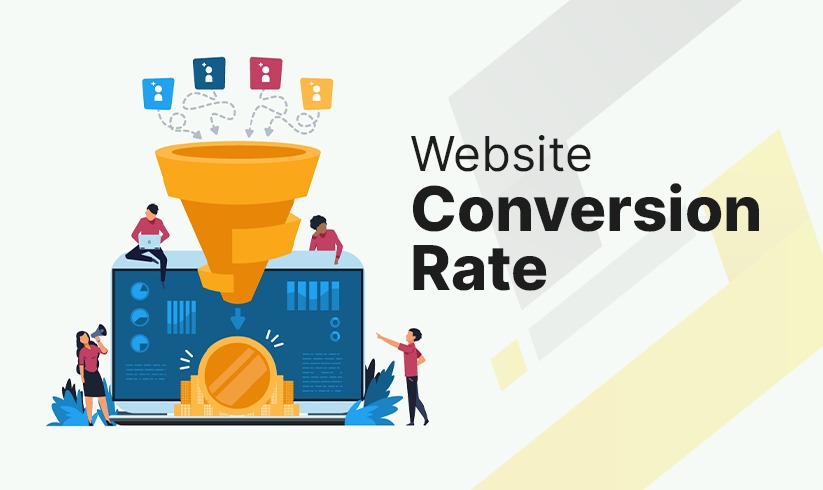
A low website conversion rate is one of the most frustrating problems for a business. Your corporate website looks professional, you’re getting traffic, but the contact form is collecting dust. This is a clear sign that your site is failing at its primary job: turning visitors into customers.
Often, the issue isn’t what your website says, but how it functions. An outdated or confusing User Experience (UX) can kill your website conversion rate, no matter how good your traffic is.
A great website guides visitors effortlessly toward a specific goal. Here are five of the biggest UI/UX trends that are laser-focused on fixing a low website conversion rate.
1. The “Bento Grid”: Clarity for a Higher Website Conversion Rate
People don’t read websites; they scan them. If a visitor can’t understand what you do and where to go within 3-5 seconds, they’ll leave. The Bento Grid—a modular layout of clearly defined boxes—is the perfect solution.
This layout presents different pieces of information (like key services, a case study, or a call-to-action) in an organized, easily digestible way. It establishes a clear visual hierarchy and guides the user’s eye to the most important content, which is a simple way to improve your website conversion rate.
2. Micro-animations That Guide the User
Micro-animations are small, subtle animations that provide feedback and make a website feel more responsive. They aren’t just decorative; they have a purpose.
- A button that subtly changes color on hover confirms it’s clickable.
- A form field that highlights when selected shows the user where they are.
- A gentle loading animation provides feedback that the system is working.
These small details reduce user uncertainty and prevent errors, creating a smooth, polished experience that encourages users to complete a task and boosts your website conversion rate.
3. Accessibility-First Design (It’s Non-Negotiable)
Website accessibility—designing for people with disabilities—is no longer an optional extra. It’s a fundamental part of good UX that directly impacts your website conversion rate.
- Larger Audience Reach: You’re not excluding ~15% of the population.
- Better SEO: Google rewards accessible websites.
- Improved Usability for All: Features like high-contrast text and clear navigation make the site easier for everyone to use.
In 2025, a website that isn’t accessible is simply a poorly designed website.
4. Interactive 3D Elements for Deeper Engagement
Want to showcase a complex product or service? A static image can only do so much. Interactive 3D elements are becoming a powerful tool to let users explore your offerings in an immersive way.
Imagine allowing a client to rotate a 3D model of a custom-built machine or a new building design. This level of interaction is highly engaging, builds trust, and helps customers understand your value proposition, which is key to conversion.
5. AI-Powered Personalization
The “one-size-fits-all” website is dead. Using AI, websites can now tailor the user experience in real-time. A visitor from the healthcare industry could be shown case studies from hospitals, while a visitor from the finance sector would see content relevant to banks.
This personalization makes visitors feel understood and dramatically increases the chances that they’ll find relevant information and convert into a lead.
Stop Guessing and Start Improving Your Website Conversion Rate
Your corporate website should be your best 24/7 salesperson. If it’s not performing, it’s not just a design problem—it’s a business problem. By embracing these modern UI/UX principles, you can transform your site from a passive brochure into an active lead-generation machine.
Is it time for a website redesign that actually gets results? Contact NestInnova for a free UI/UX audit and learn how we can boost your website conversion rate.