


7 E-commerce Web Design Trends You Can’t Ignore in 2025

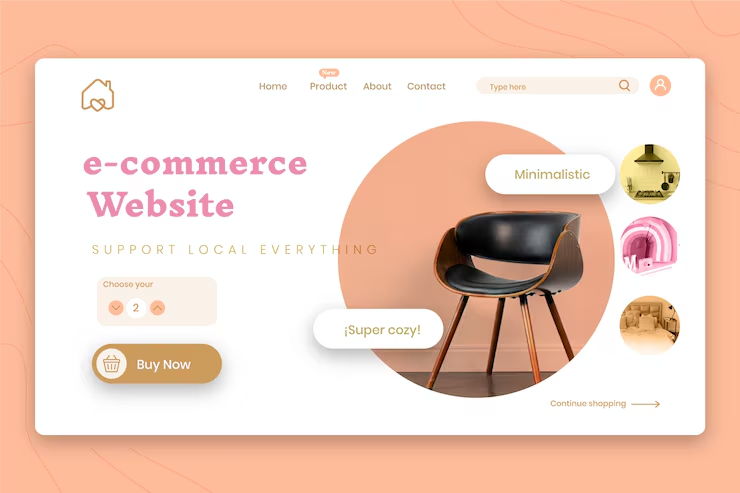
In 2025, a successful e-commerce web design involves far more than just uploading product photos and adding a “Buy Now” button. The online market is fiercely competitive. Shoppers expect speed, personalization, and a seamless experience.
If your online store is slow, clunky, or generic, you are losing sales to competitors who do it better. To succeed, your e-commerce web design needs to be more than a store; it needs to be an experience.
Here are seven e-commerce web design trends that are essential for capturing customers and driving sales in this new era of digital retail.
1. Truly Seamless Mobile-First Checkout
This isn’t just about having a “mobile-friendly” design. It’s about designing the entire checkout process for the thumb. This means large form fields, prominent buttons, minimal typing (using auto-fill), and support for mobile payment options like Apple Pay. Every ounce of friction you remove from the mobile checkout process will directly translate into fewer abandoned carts.
2. Augmented Reality (AR) “Try-On” Features
One of the biggest hurdles for online shopping is the inability to see how a product looks in real life. AR technology is smashing that barrier. A modern e-commerce web design can now include:
- Fashion: See how sunglasses or a watch look on you.
- Furniture: Place a virtual sofa in your living room to check its size.
- Cosmetics: Try on different shades of lipstick using your phone’s camera.
AR builds immense purchase confidence, leading to higher conversions and lower return rates.
3. Hyper-Personalization with AI
Generic product recommendations are a thing of the past. A smart e-commerce web design uses Artificial Intelligence (AI) to deliver hyper-personalized suggestions in real-time. By analyzing a shopper’s browsing history and past purchases, you can create a unique, “for-you” shopping experience that significantly increases the average order value.
4. Interactive 360-Degree Product Videos
High-quality photos are standard. To stand out, you need video. Shoppers want to see products in action. 360-degree videos that allow the user to spin the product and zoom in on details are becoming the new standard for product pages. This immersive experience replicates the in-store feeling of holding and inspecting a product.
5. Blazing-Fast Speed with Headless Commerce
Speed is everything in e-commerce. Even a one-second delay in page load time can cause a significant drop in conversions. Headless commerce is a modern development approach that decouples the front-end (what the customer sees) from the back-end (the e-commerce platform). This approach to e-commerce web design allows for unparalleled flexibility and lightning-fast loading speeds.
6. Optimization for Voice Search Shopping
With the rise of smart speakers, more people are shopping with their voice. “Hey Google, order more coffee.” Is your store’s product data structured in a way that voice assistants can understand? Optimizing for conversational keywords is a key part of a future-proof e-commerce web design.
7. Communicating Sustainability Through Design
Modern consumers care about the environmental and ethical impact of their purchases. Your website’s design can communicate these values. Using earthy color palettes, natural textures, and clear iconography to highlight eco-friendly materials or sustainable practices can build a powerful connection with conscious consumers.
Elevate Your Store with Modern E-commerce Web Design
In 2025, a successful online store is a perfect blend of cutting-edge technology and human-centric design. It’s fast, personal, immersive, and trustworthy.
Ready to build a next-generation e-commerce store that converts? Contact NestInnova to discuss your e-commerce web design project today.